
News of all that's transpired on and off the football field

Citing the SC order in Sahara case, Sebi has passed orders against at least five companies and 21 individuals charged with collecting thousands of crores fraudulently

Minister for External Affairs Salman Khurshid speaks about the importance of the fourth edition of the India-US Strategic Dialogue, which he co-chaired with United States Secretary of State John Kerry in New Delhi

Attacking the central government, he said it has made everybody stand in queue and wondered if this was the 'achche din' for which people had voted for Narendra Modi. "It has harmed the economy," he said.

Shashi Tharoor says the British Museum should change its name to Chor Bazaar because whatever it has within its portals is the result of 200 years of theft. The museum is once again in the eye of a storm for the possession of a statue of a god Hindus, across the world, worship as the Supreme Being.

Rediff Labs investigates the issue of child drug abuse in India in an attempt to quantify the seriousness of the issue.
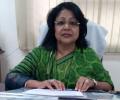
'There are no women in the Delhi government and it shows how much the government is concerned about women's issues,' says DCW chairperson Barkha Singh.

'It is vital that objects such as the Harihara -- and collections from South Asia generally -- remain here,' the British Museum tells Vaihayasi Pande Daniel.

'It is for the first time the voices of the most deferred, the most neglected, the most ignored, the most abused, the most vulnerable - the children-- has been heard. It is a great moment.' 'I always wanted Pakistan and India to have good relationships because I believe that this is very important for the development of both the countries.' 'If children are taught hatred, if they are taught about sectarianism and prejudice, then we can see that there will be terrorism in society." Nobel Peace Prize winners Kailash Satyarthi and Pakistan's Malala Yousafzai were given an ovation after they delivered their rousing speeches in front of a packed audience at a glittering ceremony in Oslo on Wednesday. A day later, they sit down for an interview with CNN's Christiane Amanpour and share their dreams, their hopes for the future. Read excerpts from the interview.
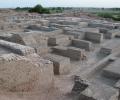
"South Asian studies" academics in the US would do well to introspect how they wittingly or unwittingly become part of Pakistan's proxy war in wielding influence over academics and policy, says Sankrant Sanu.

Top security experts of India and the US met in New Delhi on Wednesday to discuss various measures, including exchange of technologies, to help each other face challenges like terrorism, cyber crime and ensuring safety of major cities.

'With the recent challenging of the notion of the Indian Ocean Region being India's strategic backyard, China is gradually upping the ante in the maritime realm around India.'

The blockchain, the public ledger that tracks every bitcoin transaction, is changing commerce as we know it, says Devangshu Datta.

'It was only relatively recently that Subhash Kapoor was able to secure the sources in India, Afghanistan and Cambodia, that allowed him to get the really highest level objects, and that helped propel him in recent years up the ranks.'
